
AI Agents Are Here. Is Cognitive Burnout the Next Workplace Crisis?
Advertisement
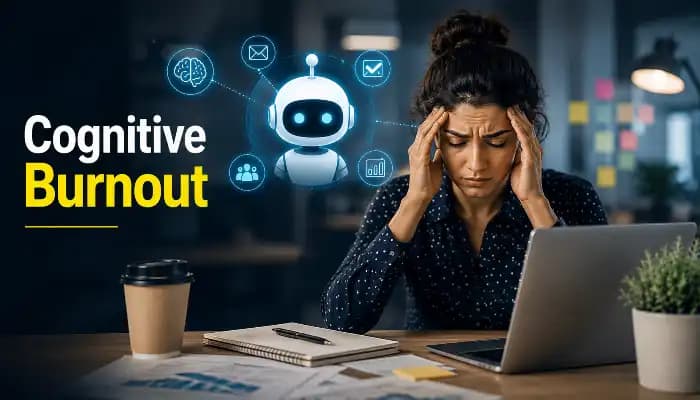

Recently, Cisco’s decision to roll out AI agents and personal assistants to all 90,000 employees marks a new phase in enterprise AI adoption. Unlike pilot projects or limited deployments, the company plans to make AI a part of every employee’s daily work.
Advertisement
While the move is expected to improve productivity by taking over routine tasks, HR experts believe its bigger impact will be on how organisations are managed, how leaders lead, and how employees experience work.
Recently, we had a panel discussion on this ladmak intitiavle with renowed HR Thought Leaders, Mr. Prabir Jha and Mr. Sahil Nayar. Sharing here some excepts.
AI Will Change Work, Not Just Automate It
Most discussions around AI focus on automation, but experts say the real change lies in redesigning work itself.
Advertisement
As AI agents begin handling routine activities such as scheduling, documentation, research and information gathering, employees will spend less time on execution and more time making decisions.
The value of a professional will no longer depend on how much information they have, but on how well they can interpret AI-generated insights, ask better questions and apply sound judgement.
This means organisations cannot simply add AI to existing processes. Roles, responsibilities and performance expectations will have to evolve alongside the technology.
Advertisement
Managers Will Need to Lead Differently
The wider use of AI is also expected to change the role of managers.
When every employee has access to powerful AI tools, information will no longer remain concentrated at the top. Younger employees with the right skills may be able to solve complex problems much earlier in their careers, reducing the traditional advantage of experience alone.
For managers, this means leadership will become less about giving instructions and more about guiding teams, encouraging critical thinking and helping people make better decisions. Soft skills such as empathy, emotional intelligence, collaboration and judgement could become the biggest differentiators in the AI era.
Experts also believe this transition may not be smooth. As AI changes the balance of knowledge inside organisations, issues such as insecurity, ego and workplace politics could become more visible.
Creating a culture where people can question ideas openly—whether they come from AI or senior leaders—will become increasingly important.
The Bigger Challenge Could Be Cognitive Burnout
While AI promises to save time, experts warn that it could create a different kind of pressure at work.
Instead of physical exhaustion, employees may increasingly experience cognitive burnout—a state where they are mentally connected to work almost all the time. With AI assistants available 24×7, professionals may continue analysing reports, comparing options or preparing for meetings long after office hours.
The result could be an “always-on” work culture where employees are physically with their families but mentally occupied with work. Over time, this constant mental engagement may affect decision-making, creativity and overall wellbeing.
Experts say organisations should focus not only on treating burnout but also on preventing it. They suggest encouraging employees to take mental breaks, create clear digital boundaries, spend time reflecting before making decisions and develop the confidence to question AI recommendations instead of accepting them blindly.
The Human Side of AI Will Decide Success
Cisco’s announcement highlights how quickly Ai and AI Agents are moving from experimentation to everyday use. But experts believe technology alone will not determine success.
The organisations that benefit the most will be those that prepare their leaders, redesign jobs and invest in human capabilities such as judgement, adaptability and emotional intelligence.
AI may become every employee’s assistant, but building trust, making balanced decisions and creating healthy workplaces will continue to remain human responsibilities.
Advertisement
Note: We are also on WhatsApp, LinkedIn, and YouTube to get the latest news updates. Subscribe to our Channels. WhatsApp– Click Here, YouTube – Click Here, and LinkedIn– Click Here